


Home / Blog / Polarisation Index Measurements Pi Vs Dar Measurement On Electromotors
02-06-2025
Polarization index measurements vs DAR measurement on electric motors:
When you test the condition of electric motors, the insulation resistance tells you a lot about reliability and safety.
Two commonly used methods in this domain are the Dielectric Absorption Ratio (DAR) measurement and the Polarization Index (PI) measurement. Although both techniques are aimed at assessing the state of insulation, they have specific applications, advantages and limitations. This article compares the two so you can pick the right one for the motor you are testing.
What is a Polarization Index measurement?
The Polarisation Index (PI) measures the insulation resistance over a longer period of time, usually 10 minutes. The result is calculated as the ratio of the insulation resistance after 10 minutes to that after 1 minute:
- PI = R(10min) / R(1min)
Application PI measurement
PI measurements are intended for in-depth examination of insulation systems, especially for high-voltage motors, for standard low-voltage motors this measurement is basically unsuitable, as the machine usually reaches maximum insulation value within 1 minute.
This measurement helps identify problems such as ageing, contamination or moisture penetration.
Common mistake in PI measurement
A common mistake when performing a PI test is to perform it immediately after an insulation test or a DC high voltage test. Due to the previous tests, the molecules of the insulation material are already partially polarised, which can lead to inaccurate measurement results during the PI test.
If a DC high voltage test has already been performed (regardless of whether it was an insulation test or a high voltage test), you must discharge the test object correctly before starting the PI test. You do this by connecting all winding wires to each other and to the housing of the test object. The test object should then be discharged for at least one hour. The longer the discharge time, the more reliable the results of the PI test will be.
Advantages PI measurement
- Detects deep isolation problems.
- Gives a more accurate picture of insulation condition over time.
- Suitable for heavy, complex insulation systems.
Restrictions
- Time-intensive (10 minutes per test).
- Less suitable for quick inspections.
Interpretation of the PI value:
| PI value | Review |
| < 1.0 | Unacceptable, possible insulation damage |
| 1.0 – 1.5 | Marginal, thorough inspection recommended |
| 1.5 – 2.0 | Acceptable, but regular monitoring needed |
| > 2.0 | Good, insulation is in excellent condition |
Why is a PI measurement not necessary at > 5 GΩ?
The PI measurement is designed to assess changes in insulation resistance over time. At very high resistance (higher than 5 GΩ after 1 minute), the insulation is so good that further measurement adds little diagnostic value. Such a high resistance indicates that:
- The insulation is in excellent condition: there are no significant leakage currents or absorption effects.
- Environmental influences are minimal: Factors such as moisture or contamination have had little or no effect on the insulation.
- The PI measurement is a waste of time: Since the test would provide little new information, it can be skipped.
A PI measurement on low-voltage motors often shows that the above situation is common, so a PI measurement on low-voltage motors is not recommended, in this case use the DAR measurement
What is a DAR measurement?
The Dielectric Absorption Ratio (DAR) measures how quickly the insulation resistance of an electric motor recovers after applying a constant DC voltage. This occurs over a short period of time, usually 30 seconds to 1 minute. The result is calculated as the ratio of the insulation resistance after 60 seconds to that after 30 seconds.
- DAR = R(60s) / R(30s)
Application DAR measurement:
DAR measurements are especially useful for insulations that stabilise quickly, such as in smaller motors (low voltage) or when environmental influences such as moisture affect insulation resistance. They give a quick indication of insulation quality, which is useful for routine inspections.
The DAR measurement can basically be applied if we are going to measure low-voltage motors, or if we perform a PI measurement that already has a value > 5 GigaOhm within 1 minute
Benefits DAR measurement:
- Fast results (within 1 minute).
- Suitable for insulations with a short absorption time.
Limitations DAR measurement:
- Less accurate for high-voltage motors (good insulation systems).
- Not suitable for detecting deep insulation problems.
DAR versus PI: When to use which method?
The choice between a DAR and PI measurement depends on the situation and the type of equipment you are testing:
| Aspect | DAR | PI |
| Test duration | 1 minute | 10 minutes |
| Suitability | low-voltage motors | high-voltage motors |
| Problem detection | Superficial insulation problems | Deep insulation problems |
| Environmental influences | Limited understanding | More accurate |
| Application | Routine-inspections | Comprehensive analyses |
The importance of regular PI measurements for critical motors: trend analysis of insulation systems
For critical motors, which are essential for the continuity of business processes, it is very important to accurately monitor the condition of the insulation system. A single Polarization Index (PI) measurement provides a snapshot of insulation resistance, but does not provide sufficient information to assess the long-term quality of the insulation system. Therefore, it is essential to perform PI measurements at regular intervals and record the results for reliable trend analysis.
Why trend analysis?
A trend analysis shows how the quality of the insulation system develops over time. This offers several advantages
- Early detection of isolation problems: Early detection of a decrease in PI values helps prevent potential failures.
- Better maintenance planning: It helps plan preventive maintenance based on data, minimising unexpected downtime.
- Lifetime prognosis: Monitoring trends provides insight into the expected lifetime of the insulation system.
Frequency of measurements
The interval for PI measurements depends on several factors:
- Importance of the engine: For engines with a high impact on business processes, a shorter interval (e.g. monthly or quarterly) is recommended.
- Environmental factors: For engines exposed to moisture, dust, or chemical influences, regular measurements are necessary.
- Historical data: When previous PI measurements show deterioration, the interval can be shortened to monitor more accurately.
A general guideline is to perform PI measurements at least once a year for stable systems and more frequently for systems at increased risk of insulation ageing.
Record keeping
For effective trend analysis, a consistent recording system is essential. For each PI measurement, record:
- The date and time of the measurement.
- The measured PI value and corresponding insulation resistance.
- Ambient conditions, such as temperature and humidity.
- Any maintenance activities or events that may affect the insulation.
Use of digital systems or maintenance software can help keep track of this data in an orderly manner and analyse trends easily.
Conclusion
Both DAR and PI measurements play an essential role in maintaining and testing electric motors. The DAR measurement is ideal for quick checks and for low-voltage motors, while the PI measurement is indispensable for in-depth analyses in high-voltage motors
Want to learn more about taking these measurements or need help testing your electric motors? Contact our experts, or visit the IONIO Motors Measurement Day on 25 March 2025 in Lunteren, where you can see live demonstrations and ask questions to specialists.
More information: IONIO Engines Measurement Day.
The following systems can perform PI and/or DAR measurements:
MotorAnalyzer 1
MotorAnalyzer 2
MotorAnalyzer 3
MTC2-R7
MTC3

Related blogs

Calibration
Electric motor testing
Your calibration certificates always at hand: the new IONIO Training Portal is live
View article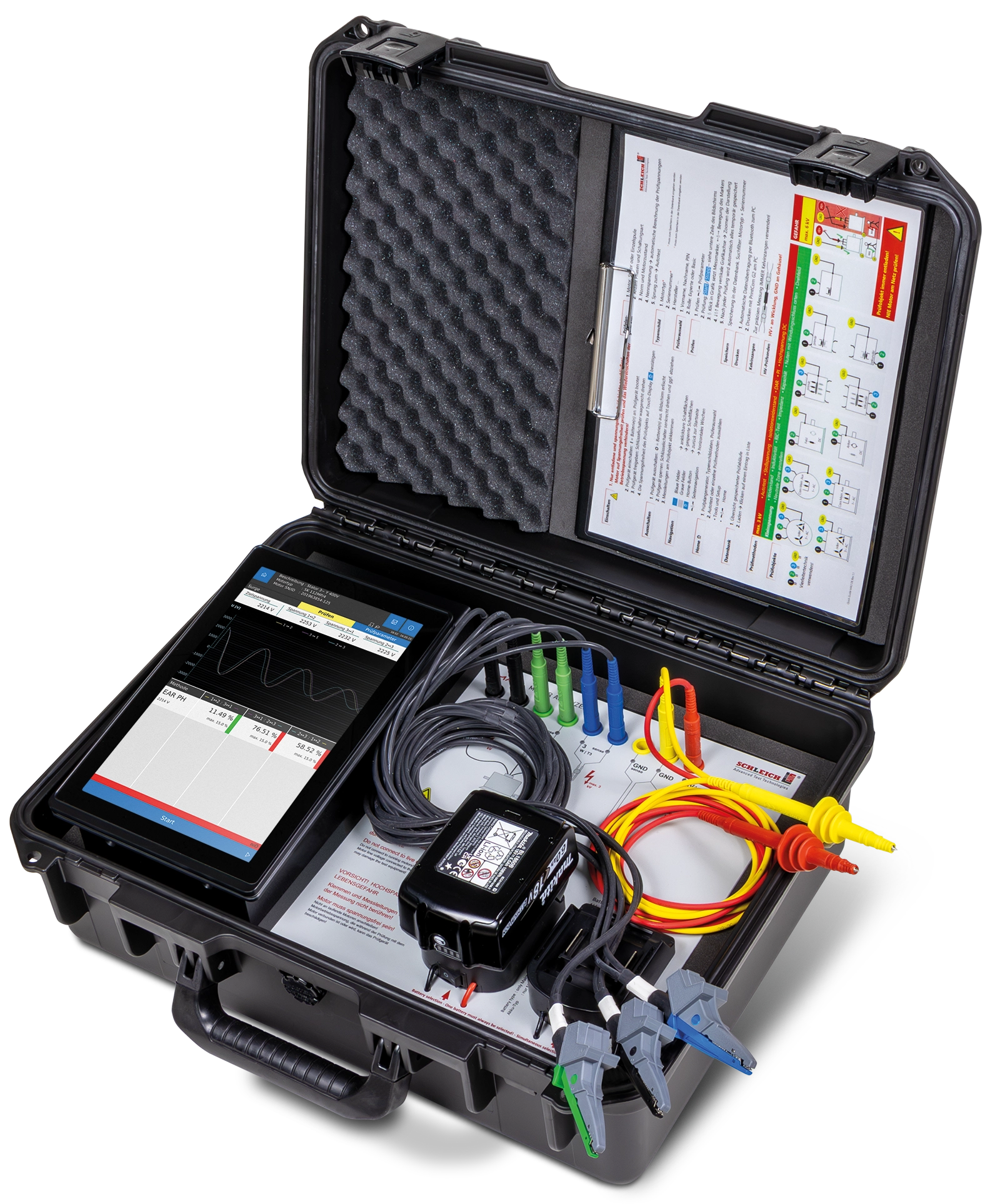


Gijsbert at IONIO is here to help you.
At IONIO, we not only supply advanced testing and measurement systems, but also offer clear and expert advice to optimise the testing of your product.
Find out how we can improve your business processes. A consultation can be scheduled in no time!










Also collaborate on technical challenges?
Then you have come to the right place at IONIO!